
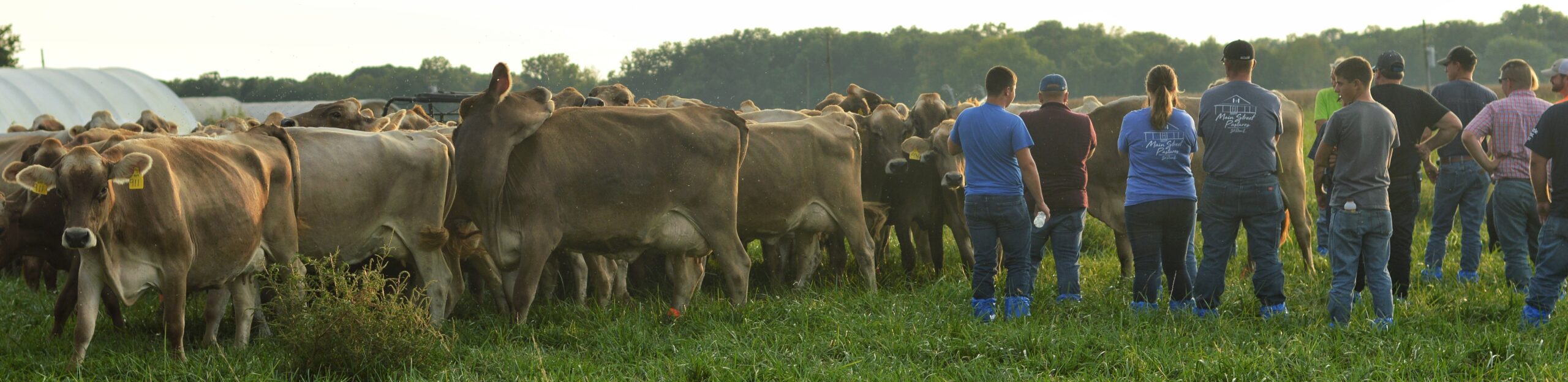
We are excited to share a set of farm profiles that highlight several approaches to dairy grazing. This set of profiles is made possible through investment by the Great Lakes Protection Fund and the Northeast Dairy Business Innovation Center. Representing farms from Michigan, Indiana, and New York, these profiles highlight a number of different ways that dairy farms can use grazing to improve profitability – and reduce nutrient loss at the same time.
Grazing farms featured in these profiles were, on average, 93% more profitable per unit of milk sold than the industry average, based on data from regional aggregations (FINBIN and Cornell). The profiles include a traditional confinement farm in transition to grazing as a way to stay profitable on their current land base. Wallace Center’s financial analysis estimates that Brooks Edge Dairy is projected to go from -$2.37 to +$2.56 net farm income per hundredweight of milk after incorporating grazing and expanding their herd size. A hundredweight of milk is a standard 100-pound unit used in the dairy industry for pricing and financial analysis.
“Using grazing on my dairy operation has allowed my profits to stay positive when other dairies my size have had to either get bigger or sacrifice their margins while maintaining a smaller herd size,” says Tom Cook of Cook Dairy Farms, one of the farms featured.
Incorporating managed grazing into these operations has also helped hold soil and nutrients in place. On average, these farms are estimated to reduce phosphorus loss by 62% compared to a conventional confinement dairy on the same footprint of land. While these operations generally have slightly higher carbon footprint per unit of milk, several farms also have smaller per acre and total farm emissions than a typical confinement operation. These environmental results were estimated using USDA’s Integrated Farm Systems Model.
Farm Profiles
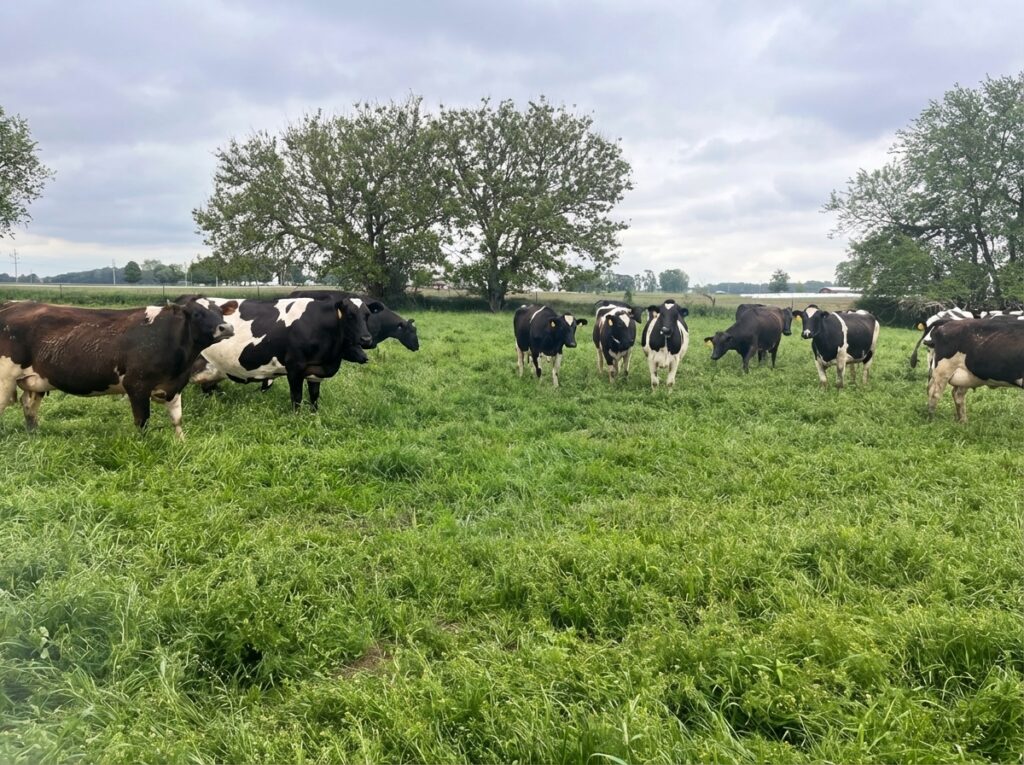
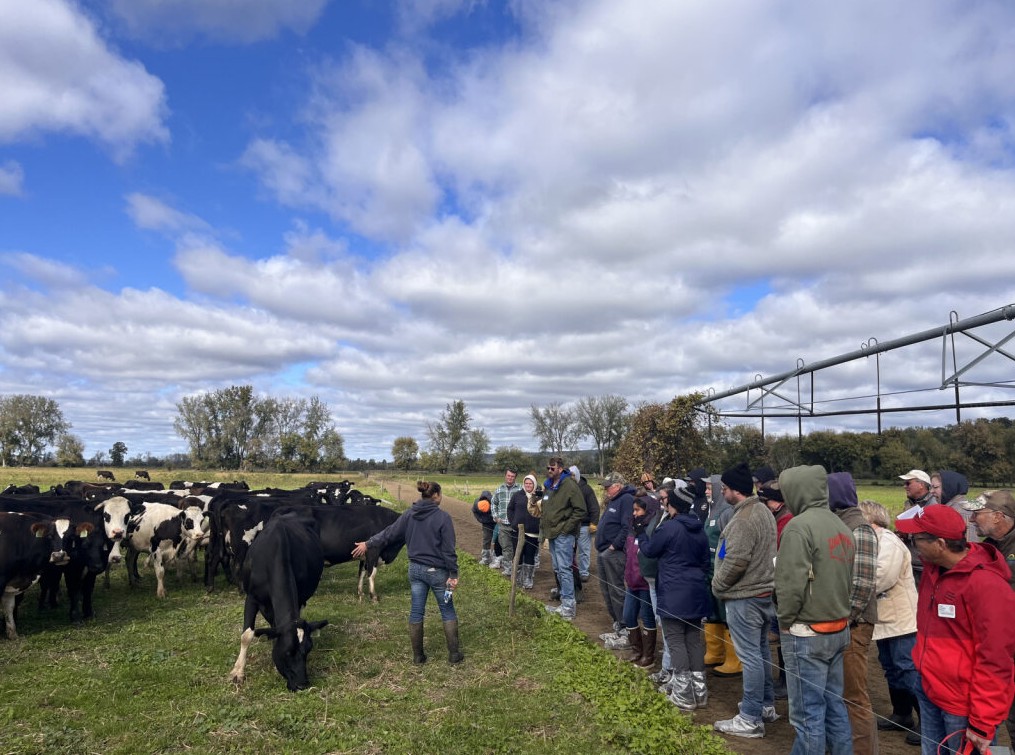
These profiles are made possible through a collaboration between Wallace Center and its partners, Dairy Grazing Alliance, Food Finance Institute, Conservation Performance, LLC, Michigan Agriculture Advancement (MiAA), Michigan Food and Farming Systems (MIFFS), and others. The partnership continues to work on creating pathways for viable dairy farming through grazing.